
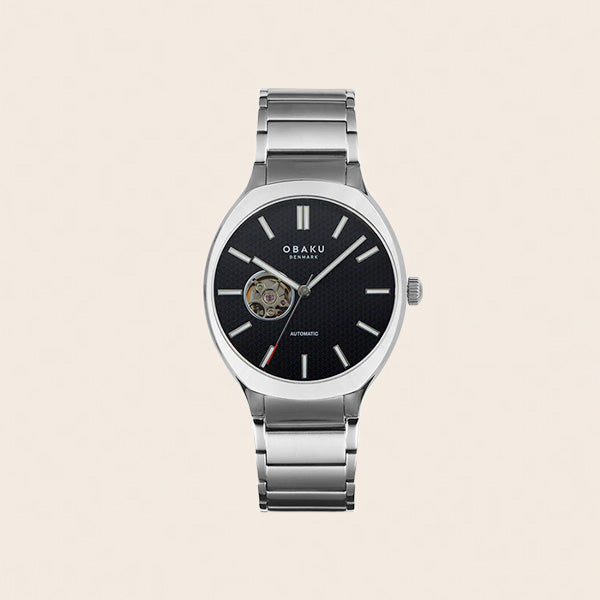
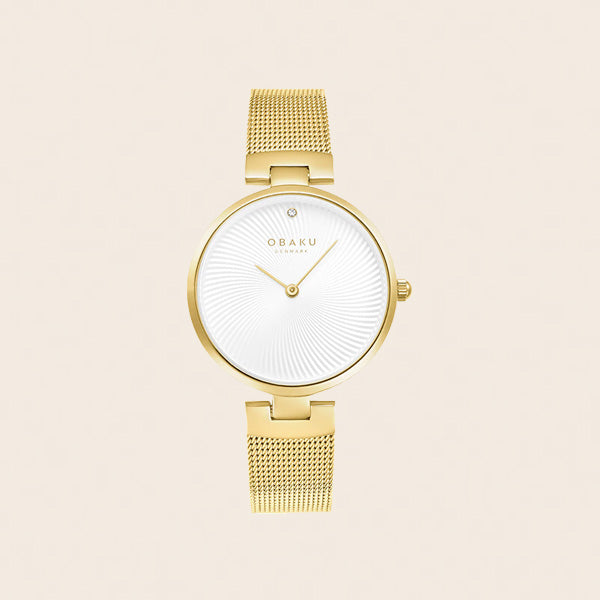


Zen philosophy teaches that nature holds the key to inner peace, viewing natural imperfection and simplicity as paths to harmony. Obaku translates this into minimalist, nature-inspired watch design—using materials like recycled coffee grounds and sustainably sourced wood to create pieces that reflect wabi-sabi beauty and Scandinavian restraint.
Long before minimalism became a design trend, Zen monks were already practicing it. Sitting in quiet gardens, watching moss grow over stone, they found something modern life often misses: the idea that nature doesn't need to be improved upon. It simply needs to be observed.
That same philosophy sits at the heart of Obaku's design approach. The Danish watchmaker doesn't just borrow natural materials for aesthetic appeal—it builds entire collections around the belief that living in harmony with nature produces better design, and arguably, a better life. From reclaimed wood dials to watch cases made from recycled coffee grounds, Obaku treats nature not as decoration but as philosophy made wearable.
This post explores how Zen's reverence for the natural world shaped Obaku's design language, why biophilic design and minimalism go hand in hand, and what wabi-sabi can teach us about beauty that doesn't try too hard.
What is the role of nature in Zen philosophy?
Zen Buddhism, which developed in China before flourishing in Japan, centers on direct experience over doctrine. Nature plays a starring role in this tradition because it offers something abstract teachings cannot: proof. A falling leaf, a weathered rock, the slow erosion of a riverbank—these are living lessons in impermanence, one of Zen's core principles.
Zen gardens, with their raked gravel and sparse plantings, aren't meant to recreate nature exactly. They're meant to distill it—to capture its essence using the fewest possible elements. This idea of intentional reduction, of removing everything unnecessary until only the essential remains, is where Zen philosophy and minimalist design philosophy start to overlap.
For Obaku, this overlap isn't incidental. The brand's name itself draws on Obaku Zen, a school of Japanese Zen Buddhism known for its contemplative simplicity. Every design decision, from dial texture to strap material, traces back to this same instinct: strip away the excess, and let nature's inherent beauty do the talking.
How does wabi-sabi explain natural imperfection in design?
Wabi-sabi is the Japanese concept of finding beauty in imperfection, transience, and incompleteness. A cracked ceramic bowl, a knot in a wooden plank, the uneven grain of reclaimed timber—wabi-sabi asks us to see these not as flaws but as evidence of authenticity.
This principle directly informs nature-inspired watch design. Mass-produced watches often aim for uniformity: identical dials, flawless finishes, zero variation between units. Wabi-sabi rejects that uniformity on principle. It argues that a material's natural irregularities, like the grain pattern in a wood dial, are part of what makes an object meaningful.
Choose wabi-sabi-influenced design if you value character over consistency. A watch with a wood dial will never look identical to another, even within the same collection, because wood itself doesn't grow that way. That variation is the point, not a defect to be corrected.
What is biophilic design, and how does it relate to minimalism?
Biophilic design is the practice of incorporating natural elements, materials, and patterns into man-made objects and spaces to strengthen the human connection to nature. Research in environmental psychology has consistently linked exposure to natural materials and forms with reduced stress and improved well-being, which explains why biophilic principles have found their way into everything from office architecture to product design.
Minimalism and biophilic design share a surprising amount of common ground. Both philosophies reject clutter. Both prioritize materials with inherent character over artificial embellishment. And both assume that less visual noise allows the few elements that remain to carry more weight.
In watchmaking, this means letting a single material, like wood or stone, define the entire aesthetic rather than layering on unnecessary complications or ornamentation. A minimalist wood dial watch doesn't need excessive detailing because the wood grain itself provides visual interest.
How does Scandinavian design connect nature and minimalism?
Danish and broader Scandinavian design has long been defined by its relationship to the natural world. Long winters and limited daylight hours across the region have historically pushed designers toward functional, light-maximizing, nature-referencing solutions. Hygge, the Danish concept of cozy contentment, often centers on natural materials like wood, wool, and stone precisely because they bring warmth into minimalist spaces.
This Danish design and nature connection is baked into Obaku's identity as a Danish watch brand. The brand applies Scandinavian restraint, clean lines, muted tones, and functional simplicity, while using natural materials to avoid the coldness that minimalism can sometimes produce. The result is a design language that feels both pared-back and approachable.
How does Obaku use sustainable materials in watchmaking?
Obaku's commitment to nature extends beyond aesthetics into material sourcing. Two collections in particular illustrate this commitment clearly.
The Obaku Trae wood watch collection uses sustainably sourced wood to create lightweight, naturally patterned timepieces. Because no two pieces of wood grain are identical, each Trae watch carries subtle variation, a direct expression of wabi-sabi's embrace of natural imperfection.
The Obaku Kaffe recycled coffee watch takes material sustainability a step further by incorporating recycled coffee grounds into its construction. This approach reduces waste while giving the watch a distinct texture and earthy tone that synthetic materials can't replicate.
Choose the Trae collection if you're drawn to visible wood grain and organic variation. Choose the Kaffe collection if sustainable material innovation and a more textured, matte finish matter more to you. Both reflect the same underlying philosophy: natural materials, used honestly, create more meaningful design than synthetic substitutes.
Living in harmony with nature, one design choice at a time
Zen philosophy never set out to influence watchmaking. But its core insight—that nature's imperfect, ever-changing beauty deserves attention rather than correction—translates naturally into design principles that still resonate today. Obaku's wood dials, recycled coffee materials, and Scandinavian restraint are modern expressions of an old idea: that harmony with nature produces objects, and lives, with more substance.
If this philosophy resonates with you, consider how it might apply to your own choices, whether that's an accessory, a piece of furniture, or simply how you approach the easy, ordinary things in life. Nature, after all, rarely needs improving. It just needs noticing.
Frequently asked questions
What makes a watch "nature-inspired"?
A nature-inspired watch uses natural materials, such as wood, stone, or recycled organic matter, and often features irregular patterns or textures that reflect the material's natural state rather than disguising it.
Is wabi-sabi design more expensive than conventional design?
Not necessarily. Wabi-sabi design prioritizes authentic materials over elaborate ornamentation, which can actually reduce manufacturing complexity compared to highly uniform, heavily processed designs.
Who is biophilic watch design best suited for?
Biophilic design suits people who value sustainability, natural texture, and a calming aesthetic over flashy or highly polished accessories.
What's the difference between the Obaku Trae and Kaffe collections?
The Trae collection features sustainably sourced wood dials with visible grain variation, while the Kaffe collection uses recycled coffee grounds for a matte, earthy finish. Both reflect Obaku's nature-driven design philosophy, but differ in material and texture.
Does Zen philosophy require specific religious belief to appreciate its design influence?
No. While Zen originates from Buddhist practice, its design principles- simplicity, impermanence, and natural beauty- can be appreciated and applied independently of religious context.