
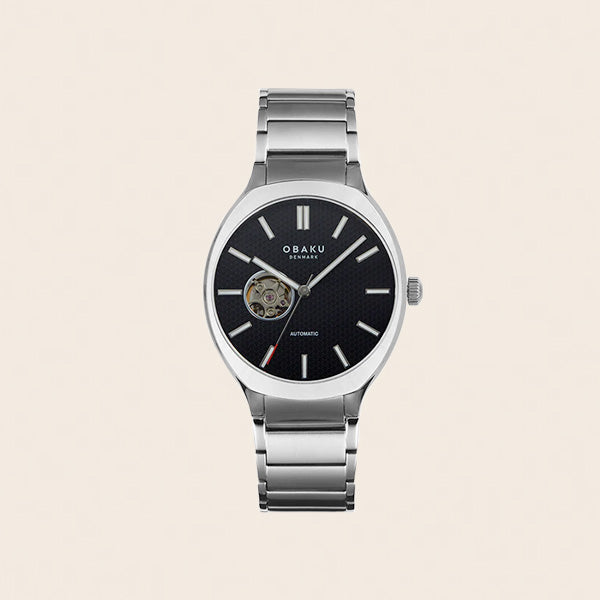
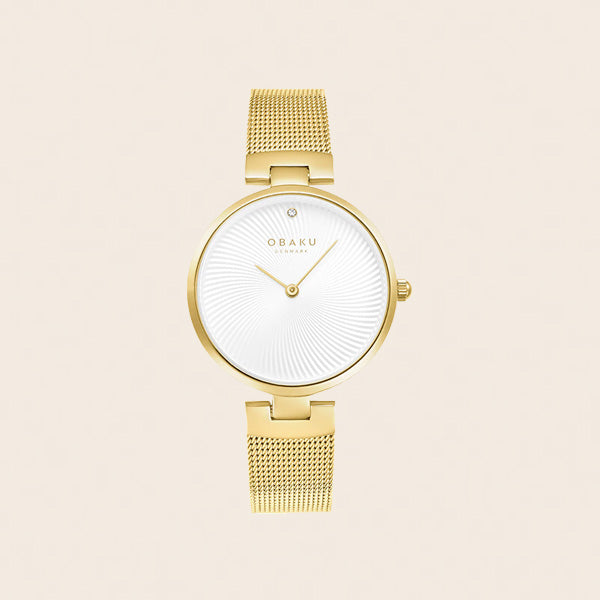
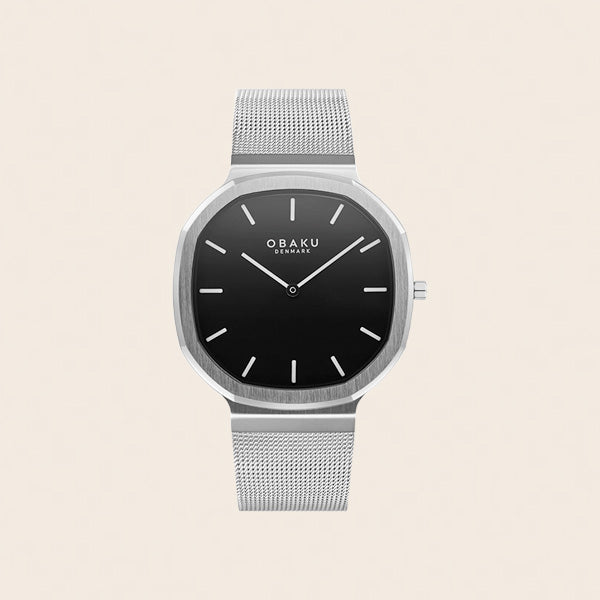

Obaku's "Just Be" philosophy draws on Zen principles and Danish design values to encourage present moment awareness. By slowing down, simplifying your surroundings, and using intentional tools—like a minimalist watch—as mindfulness reminders, living in the present moment becomes a daily, accessible practice.
Most people spend the majority of their waking hours somewhere other than the present. Replaying yesterday's conversation. Planning next week's schedule. Scrolling through content that pulls attention in every direction at once. The present moment—the only place where life actually happens—keeps slipping by unnoticed.
This isn't a personal failing. It's the natural result of environments designed to fragment attention. But there's a growing countermovement: people choosing to slow down, reclaim their focus, and practice what Zen philosophy has taught for centuries—that the present moment is the only moment that truly exists.
Obaku, the Danish watch brand known for its clean, minimalist aesthetic, has built its entire identity around this idea. Their "Just Be" philosophy isn't a marketing tagline. It's a genuine invitation to rethink how you relate to time. Rather than racing against it, what if you simply inhabited it?
This post explores the Obaku Zen philosophy, what it means to embrace the present moment, and practical ways to bring mindful living into your everyday life—starting with the simple, often overlooked act of looking at your watch.
What Is the Obaku "Just Be" Philosophy?
Obaku takes its name from one of the three main schools of Japanese Zen Buddhism. The Obaku school, founded in 17th-century Japan, emphasized simplicity, presence, and the beauty found in ordinary moments. These same values inform how the Obaku watch brand approaches both design and daily living.
The "Just Be" philosophy is straightforward: stop striving, stop performing, and allow yourself to simply exist in the present. Danish design has long championed this kind of intentional restraint—form follows function, clutter is the enemy, and beauty emerges from simplicity. When you combine that aesthetic sensibility with Zen philosophy and mindfulness, you get something quietly powerful.
An Obaku watch, with its uncluttered dial and deliberate design, becomes more than a timekeeping device. It becomes a mindfulness reminder—a small, wearable prompt to ask: Where is my attention right now?
Why Is Living in the Present Moment So Difficult?
Before exploring how to embrace the present moment, it helps to understand why presence is so hard to sustain.
The human brain has a natural tendency to wander. Research from Harvard University found that people spend nearly 47% of their waking hours thinking about something other than what they're currently doing. This mind-wandering is strongly associated with lower reported happiness—more so than the activity itself.
Notifications, deadlines, digital feeds, and the relentless pace of modern life compound this tendency. The result is a kind of chronic low-grade distraction that makes genuine present moment awareness feel almost countercultural.
But cultivating presence isn't about achieving some perfect meditative state. It's about returning to the present, repeatedly, with patience—treating attention as a skill rather than a fixed trait.
How Does Zen Philosophy Approach Mindfulness and the Present Moment?
Zen philosophy: mindfulness is not about emptying the mind or retreating from the world. It's about engaging fully with what's in front of you—whether that's a cup of tea, a conversation, or a walk to the mailbox.
Several core Zen concepts underpin this approach:
Mushin — A state of "no mind," where you respond to what's happening without excessive analysis or judgment. Athletes call this being "in the zone." Zen practitioners cultivate it through daily practice.
Shoshin — "Beginner's mind." Approaching familiar experiences with fresh curiosity, as though encountering them for the first time. This dissolves the autopilot mode that keeps so many people mentally absent from their own lives.
Ichi-go ichi-e — Literally, "one time, one meeting." The idea that each moment is irreplaceable and will never occur again exactly as it is. This principle transforms even mundane interactions into something worth paying attention to.
Together, these ideas form the philosophical backbone of the Obaku "Just Be" approach—and offer a surprisingly practical framework for mindful living in a busy world.
Practical Tips: How to Embrace the Present Moment Daily
Mindfulness doesn't require a meditation cushion or an hour of uninterrupted silence. Here are ways to practice present moment awareness throughout an ordinary day.
Start your morning without screens.
The first few minutes after waking set the tone for how your mind will operate for the rest of the day. Reaching for your phone immediately trains attention to be reactive—responding to whatever the algorithm serves up rather than choosing where focus lands. Try spending the first ten minutes of your day in quiet. Drink your coffee. Watch the light change. Let your mind ease into wakefulness without external input.
Use physical objects as mindfulness anchors.
A mindfulness anchor is any object or sensation you deliberately use to return attention to the present. Your breath is the classic example. But a minimalist watch can serve the same purpose. Each time you check the time, pause for one breath before moving on. That single, deliberate pause interrupts the autopilot cycle and brings you back to now. This is the practical wisdom behind the idea of a watch as a mindfulness reminder—it's not about the watch itself, but about what it prompts you to do.
Practice single-tasking
Multitasking is largely a myth. Research consistently shows that humans are not capable of focusing deeply on two things at once—the brain simply toggles between tasks rapidly, with quality suffering at each switch. Single-tasking—giving one activity your full, undivided attention—is both a productivity strategy and a mindfulness practice. When you eat, eat. When you listen, listen. When you write, write.
Build "slow moments" into your day.
Intentional living philosophy often emphasizes the importance of creating space. That might mean a ten-minute walk without headphones, sitting by a window without looking at your phone, or preparing a meal with deliberate attention to each step. These aren't wasted minutes. They're the moments where life actually registers.
Simplify your environment
Danish design and mindful living share a core principle: a cluttered environment generates a cluttered mind. Reducing visual noise—in your workspace, your wardrobe, your digital desktop—lowers the cognitive load your brain carries throughout the day. Less stimulation competing for attention means more space for genuine presence.
What Role Does Minimalist Design Play in Supporting Mindful Living?
The relationship between Danish design and mindful living is not accidental. Danish design philosophy—characterized by clean lines, purposeful function, and restrained aesthetics—creates environments that support calm rather than agitation.
An Obaku watch embodies this relationship. The minimalist dial doesn't overwhelm. It doesn't demand attention. It simply tells the time, clearly and beautifully, and then recedes. This restraint is itself a form of respect for the wearer's attention.
Surrounding yourself with objects that are thoughtfully designed—that do what they're meant to do without excess—gradually shapes how you move through the world. It makes intentional living feel less like effort and more like environment.
How to Slow Down in a Busy World Without Withdrawing From It
One of the most common misconceptions about mindful living is that it requires stepping back from ambition, productivity, or engagement with the world. The Obaku Zen philosophy suggests otherwise.
Slowing down isn't the same as doing less. It means doing what you do with more attention and less reactivity. A surgeon who is fully present during an operation is not moving slowly—but their attention is completely, deliberately focused. A parent who puts the phone down during dinner isn't being unproductive—they're fully invested in something that matters.
The goal of present moment awareness is not withdrawal. It's depth. Full engagement with what's actually in front of you, rather than a fractured, half-present relationship with everything at once.
The Obaku Approach: Wearing Your Philosophy
A watch is, on the surface, a practical object. But the decision to wear one—and which one to choose—says something about how you relate to time.
Obaku's minimalist watches are designed to complement a life lived with intention. The clean face, the deliberate details, the quiet confidence of the design—these are not incidental. They reflect a philosophy: that beauty doesn't need to shout, that time doesn't need to be feared, and that the present moment is enough.
For those exploring mindfulness and inner peace, having a physical reminder on your wrist can be genuinely useful. Every glance at your watch becomes an opportunity. Not just to note the hour, but to ask: Am I actually here right now?
Finding Your Way Back to the Present
The present moment doesn't need to be manufactured or forced. It's already here—it always is. What changes is how often you notice it.
Zen philosophy, mindfulness, Danish design values, and the Obaku "Just Be" philosophy all point in the same direction: toward a simpler, more attentive way of moving through your days. Not because life should be easy, but because the richness of experience is only available when attention is actually present to receive it.
Start small. Use your morning coffee as a practice. Let your watch prompt a breath. Choose one meal this week to eat without distraction. These aren't grand gestures—they're the daily, unglamorous work of learning how to be here.
And being here, it turns out, is the whole thing.
Frequently Asked Questions
What does "living in the present moment" actually mean in practice?
Living in the present moment means directing your attention to what's happening now—rather than ruminating on the past or anticipating the future. In practice, it looks like listening fully during a conversation, noticing physical sensations during everyday tasks, and regularly returning attention to the current moment when it drifts. It's a skill developed through repetition, not a permanent state you achieve.
What is the Obaku "Just Be" philosophy?
The Obaku "Just Be" philosophy is rooted in Zen principles and Danish design values. It encourages people to embrace simplicity, slow down, and find meaning in ordinary moments. Obaku's minimalist watch designs reflect this philosophy—serving as daily, wearable reminders to practice present moment awareness.
How is Zen philosophy different from general mindfulness?
Zen philosophy is one of the traditions that modern mindfulness practice draws from, but it goes deeper than stress-reduction techniques. Zen emphasizes direct, experiential engagement with the present moment, beginner's mind (approaching life with fresh curiosity), and the impermanence of each experience. General mindfulness practices often focus on attention and breath; Zen philosophy mindfulness applies this awareness to every aspect of daily living.
Can a minimalist watch genuinely help with mindfulness?
A minimalist watch functions as a mindfulness anchor—a physical cue that prompts a return to the present moment. Every time you check the time, you have a brief opportunity to pause, breathe, and notice where your attention is. The simplicity of Obaku's watch design supports this: rather than demanding attention, it quietly offers a moment of reflection.
How do I start practicing mindful living if I have a busy schedule?
You don't need large blocks of time to begin practicing mindful living. Start with micro-practices: one screen-free morning, single-tasking during meals, or a short walk without headphones. The goal is not to add more to your day, but to bring more attention to what's already there. The intentional living philosophy is less about dramatic lifestyle changes and more about small, consistent shifts in awareness.
Is mindfulness the same as slowing down?
Not exactly. Mindfulness is about the quality of attention, not the pace of activity. You can be fully present during a fast-paced workday or deeply distracted during a quiet afternoon. That said, deliberately slowing down—building pauses into your day—creates conditions that make present moment awareness easier to access and sustain.

