
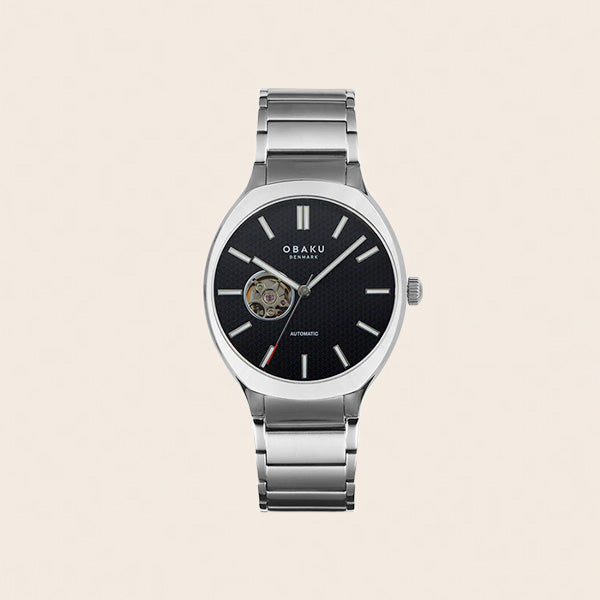
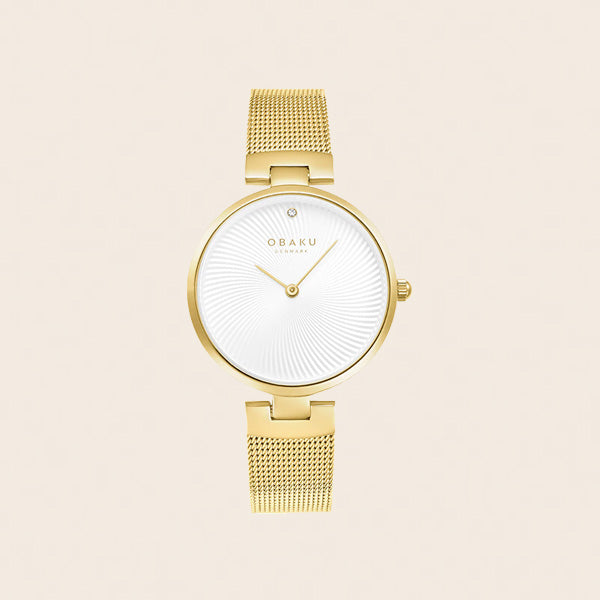
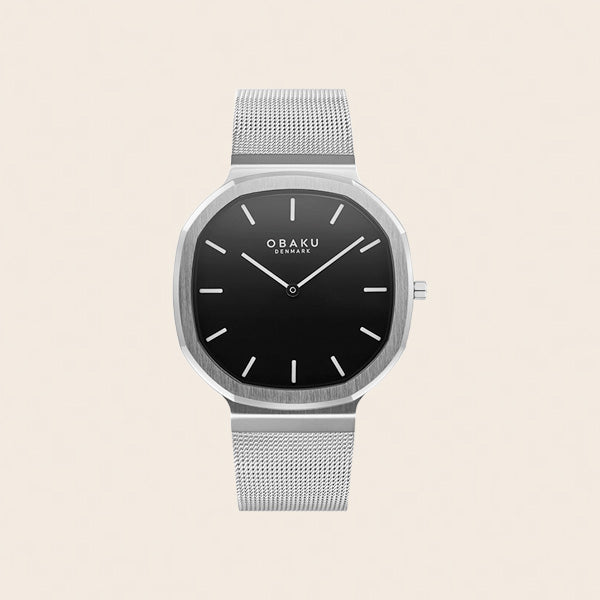

Zen philosophy is a school of Mahayana Buddhism that emphasizes simplicity, mindfulness, and direct experience over intellectual complexity. Obaku Denmark applies these Zen principles to watchmaking by stripping away ornamentation, favoring clean lines, and designing timepieces that encourage wearers to slow down and be present.
There's a quiet power in objects that don't demand your attention. No flashing lights, no unnecessary complexity—just form meeting function with elegant precision. That's the essence of Zen philosophy, and it's the same spirit that flows through every Obaku watch.
Obaku Denmark has built its entire design philosophy around a single idea: less is more. But this isn't minimalism for minimalism's sake. Obaku's aesthetic is rooted in centuries-old Zen Buddhist thought, translated through a distinctly Scandinavian lens. The result is a collection of watches that feel meditative, intentional, and quietly beautiful.
To understand why Obaku designs the way it does, you first need to understand Zen. Where did it come from? What does it actually teach? And how do its principles translate into something as tangible—and as everyday—as a wristwatch?
What Is Zen Philosophy, and Where Does It Come From?
Zen is a school of Mahayana Buddhism that originated in China (where it was called "Chan") around the 6th century CE, before spreading to Japan, Korea, and Vietnam. The word "Zen" itself is derived from the Sanskrit word dhyana, meaning meditation or focused awareness.
Unlike many philosophical traditions, Zen is not primarily concerned with doctrine or scripture. It places direct experience above intellectual analysis. The goal isn't to think your way to enlightenment—it's to be present, fully and without distraction.
Zen teachings emphasize:
-
Mindfulness: paying complete attention to the present moment
-
Simplicity: removing what is unnecessary so that what remains can be fully appreciated
-
Wabi-sabi: finding beauty in imperfection, impermanence, and incompleteness
-
Emptiness (Mu): the idea that space and absence can be as meaningful as presence
These principles influenced Japanese art, architecture, tea ceremony, calligraphy, and garden design for centuries. They also quietly shaped modern design movements—including Scandinavian minimalism, with which they share a remarkable amount of common ground.
How Do Zen Buddhism and Scandinavian Design Share the Same DNA?
At first glance, a 6th-century Chinese Buddhist philosophy and the clean-lined design traditions of Denmark might seem like an unlikely pairing. Look closer, and the overlap becomes hard to ignore.
Scandinavian design—especially Danish design—has long prioritized function over decoration. The Danish design movement that emerged in the mid-20th century championed craftsmanship, purposeful form, and an absence of excess. These are, in essence, the same values Zen Buddhism has championed for over a millennium.
Both traditions reject the idea that more is better. Both find elegance in restraint. Both treat objects as extensions of daily life—things that should serve you without overwhelming you.
Obaku Denmark sits precisely at the intersection of these two philosophies. The brand fuses the mindfulness of Zen Buddhism with the functional elegance of Danish design, creating what might best be described as a Scandinavian-Zen design fusion. The result feels both ancient and entirely contemporary.
What Is Wabi-Sabi, and How Does It Influence Obaku Watch Design?
Wabi-sabi is one of the most distinctive concepts in Zen philosophy—and one of the most misunderstood. In the West, it's often reduced to "rustic charm" or "embracing flaws." But wabi-sabi goes deeper than that.
Wabi refers to a kind of simplicity found in solitude and nature. Sabi refers to the beauty that comes with the passage of time—the worn texture of aged wood, the patina on old metal, the quiet dignity of things that have been used and loved. Together, wabi-sabi is a framework for finding beauty in transience and imperfection.
For a watch brand, wabi-sabi carries special resonance. A watch is, by definition, a device that marks the passage of time. Obaku's design language honors this. Clean dials without clutter. Subdued color palettes that won't demand attention. Cases and straps that wear gracefully rather than fighting the inevitable signs of use.
Wabi-sabi in Obaku watch design isn't about making watches look old. It's about making watches that are honest—about what they are, what they do, and how they age.
How Does the "Less Is More" Philosophy Show Up in Obaku's Designs?
Every design decision Obaku makes is guided by a single editorial instinct: if it doesn't serve the wearer, remove it. This is the less-is-more design philosophy in practice.
Clean Lines and Zen Aesthetics
Obaku dials are deliberately uncluttered. Hour markers are minimal—sometimes absent entirely. Hands are slim and precise. The case profiles are thin, sitting comfortably against the wrist without drawing unnecessary attention. Nothing is decorative for decoration's sake.
This approach mirrors the Zen concept of ma (間)—the Japanese idea of negative space as a meaningful design element. In a crowded, noisy world, blank space isn't emptiness. It's room to breathe.
Simplicity in Everyday Objects
Obaku treats the watch as an everyday object in the truest sense. These aren't showpieces locked behind glass—they're companions for daily life. The design reflects that. Obaku watches are light, comfortable, and unobtrusive. They don't compete with your outfit or your environment. They complement them.
This philosophy aligns directly with Zen principles in daily life, where mindfulness isn't reserved for meditation sessions but woven into ordinary moments—making tea, walking to work, glancing at your wrist to check the time.
Materials That Speak Quietly
Obaku selects materials the same way a Zen garden selects stones: deliberately, with attention to texture, weight, and feel. Stainless steel cases. Genuine leather straps with natural grain. Scratch-resistant sapphire crystal. Each material is chosen to age well and feel intentional in the hand.
Why Does Zen Philosophy Resonate So Strongly in Modern Product Design?
There's a reason Zen-inspired design has gained significant cultural traction over the past two decades. Screens multiply. Notifications accumulate. Choices proliferate. The visual noise of modern life has reached a point where simplicity feels not just appealing, but genuinely restorative.
Obaku's Zen philosophy watch designs respond to this moment. When a product asks nothing extra of you—when it simply works, looks honest, and fits quietly into your life—it offers something rare: a small, daily experience of calm.
This is how Zen philosophy influences modern products most powerfully. Not through direct quotation of Buddhist texts, but through the lived, tactile experience of an object that respects your attention.
How Obaku Translates Mindfulness Through Minimalism
Mindfulness through minimalism sounds like a marketing phrase, but for Obaku it's a genuine design brief. Every watch the brand makes is meant to do one thing exceptionally well: tell time, beautifully, without distraction.
There are no rotating bezels packed with numerals. No chronograph subdials crowding the case. No luminous accents in aggressive colors. Obaku watches are for people who want to be present—and who don't need their wristwatch to announce itself to the room.
This is the Obaku Zen philosophy watch in action. It's a product philosophy that says: your attention is valuable. We won't waste it.
The Obaku Denmark Design Philosophy in a Single Idea
If Obaku's entire design approach had to be compressed into one sentence, it might be this: create objects worthy of a second glance, not a second thought.
The Danish Zen design brand has found a way to make watchmaking feel almost meditative. Each collection reflects a considered point of view—one shaped by Zen Buddhism and simplicity, refined through Scandinavian craft traditions, and expressed through materials and proportions that reward quiet attention.
Start Seeing Your Watch Differently
Zen philosophy isn't asking you to meditate for an hour each morning or rearrange your living room. At its most accessible, it simply asks you to pay attention to the objects you choose to bring into your daily life. What do they add? What do they ask of you?
An Obaku watch offers a small but genuine answer to those questions. It's a timepiece designed to slow you down—not by stopping time, but by giving you something worth noticing each time you glance at your wrist.
Browse the Obaku collection and explore how Zen-inspired design can make an everyday object feel extraordinary.
Frequently Asked Questions
What is Zen philosophy in simple terms?
Zen philosophy is a branch of Mahayana Buddhism focused on mindfulness, simplicity, and direct experience. Rather than emphasizing scripture or doctrine, Zen teaches awareness of the present moment and the value of removing unnecessary complexity from life.
How does Zen philosophy influence minimalist design?
Zen philosophy influences minimalist design by promoting the idea that objects should serve their purpose without excess ornamentation. Key Zen concepts—including wabi-sabi, negative space (ma), and simplicity—encourage designers to remove anything that doesn't add genuine value.
What does wabi-sabi mean in design?
Wabi-sabi is a Zen-rooted Japanese aesthetic philosophy that finds beauty in imperfection, impermanence, and natural aging. In design, wabi-sabi favors honest materials, restrained ornamentation, and objects that wear gracefully over time.
What makes Obaku's design philosophy unique?
Obaku Denmark fuses Zen Buddhist principles of simplicity and mindfulness with the functional elegance of Scandinavian design. The result is a watch aesthetic defined by clean lines, uncluttered dials, and materials chosen for longevity and quiet beauty—rather than visual impact.
Is Obaku a Zen brand?
Obaku draws direct inspiration from Zen philosophy, particularly its emphasis on simplicity, mindfulness, and the beauty of restraint. While Obaku is a Danish watch brand, its design language reflects Zen Buddhism and simplicity more closely than traditional Swiss watchmaking conventions.
How does the "less is more" design philosophy apply to watches?
In watchmaking, the less-is-more philosophy means reducing the dial to its essential elements—hands, hour markers, and a clean case—without unnecessary complications or decoration. Obaku applies this principle to create watches that are visually calm, easy to read, and comfortable to wear daily.